
Marsa Al Saadiyat Abu Dhabi: Future, Investment Potential & What’s Coming
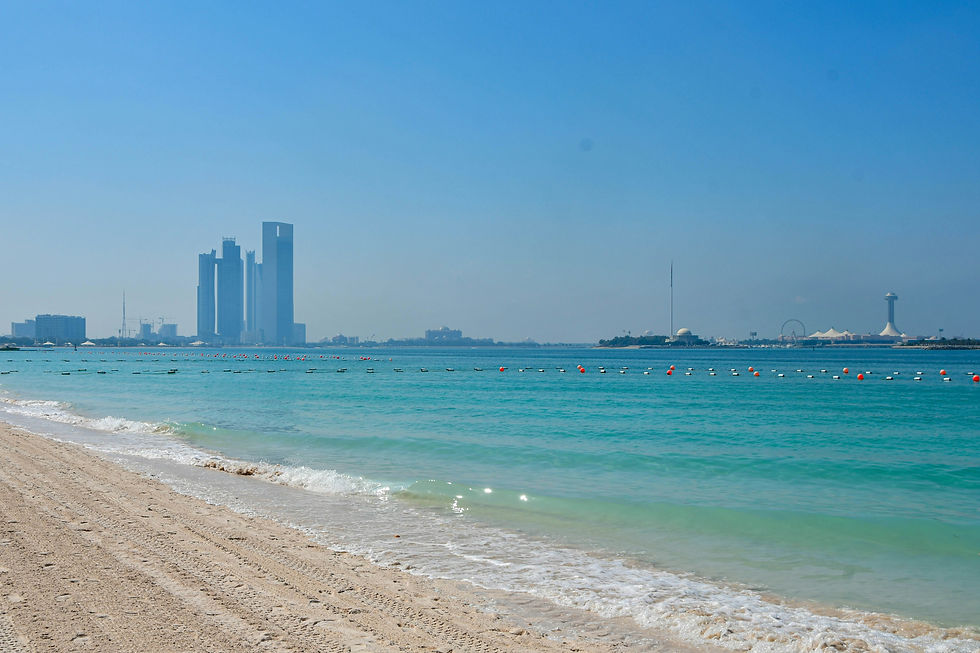
Abu Dhabi’s luxury property market is entering a significant new phase, and one of the developments most likely to shape that next chapter is Marsa Al Saadiyat.
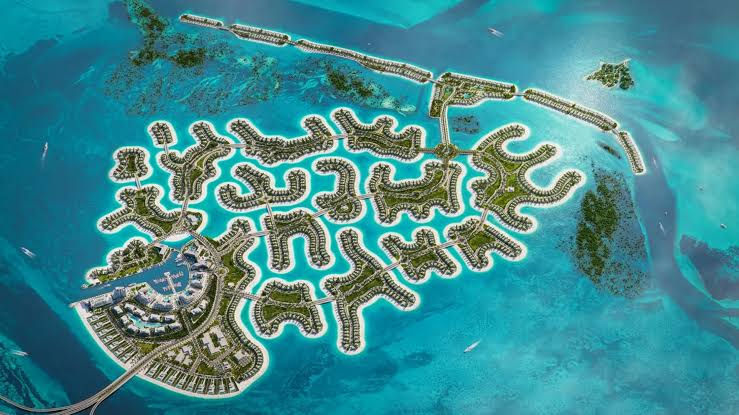
Unveiled by Aldar in July 2026, Marsa Al Saadiyat represents the final major phase of the wider Saadiyat Island masterplan. With an estimated gross development value of AED 100 billion, approximately 6.4 million sqm of land and a planned population of more than 58,000 residents, this is not simply another residential launch. It is effectively an entirely new waterfront district being added to one of Abu Dhabi’s most established luxury addresses.
For investors looking beyond individual project launches and considering where Abu Dhabi’s next major concentration of capital, infrastructure and lifestyle development will occur, Marsa Al Saadiyat deserves attention.
What Is Marsa Al Saadiyat?
Marsa Al Saadiyat is a new waterfront master development by Aldar Properties, positioned alongside the existing Saadiyat Cultural District and established residential communities of Saadiyat Island.
The scale is substantial. Aldar’s masterplan includes:
8 km of waterfront
5.6 km of beaches
Abu Dhabi’s largest marina
A 1 km waterfront promenade
Approximately 140 km of interconnected walking routes
A 46 km cycling network
Private mansions, luxury villas, waterfront apartments and branded residences
Restaurants, hospitality and lifestyle destinations
A dedicated theatre district
Schools and community infrastructure
An underground Etihad Rail high-speed station integrated into the masterplan Aldar
Rather than operating as an isolated residential development, Marsa Al Saadiyat is being designed as a fully integrated district where homes, culture, leisure, mobility and waterfront living coexist.
That difference is important from an investment perspective.
Marsa Al Saadiyat Represents the Next Evolution of Saadiyat Island
Saadiyat has spent years developing its identity around three primary pillars: beachfront living, culture and ultra-prime real estate.
Marsa Al Saadiyat adds another dimension: scale.
Until now, many of Saadiyat’s strongest residential propositions have been individual communities or developments positioned around specific lifestyle offerings. Marsa creates a significantly larger ecosystem capable of supporting its own population, marina, retail, hospitality and cultural infrastructure.
Aldar has described Marsa as the final phase of Saadiyat Island’s masterplan. That matters because it signals a transition from an island that is still developing into one that is approaching maturity as a complete luxury destination.
For long-term buyers, this type of masterplan activation can be more important than the launch of any single building.
The First Residential Launch: Talay
The first residential community within Marsa Al Saadiyat has now been announced.
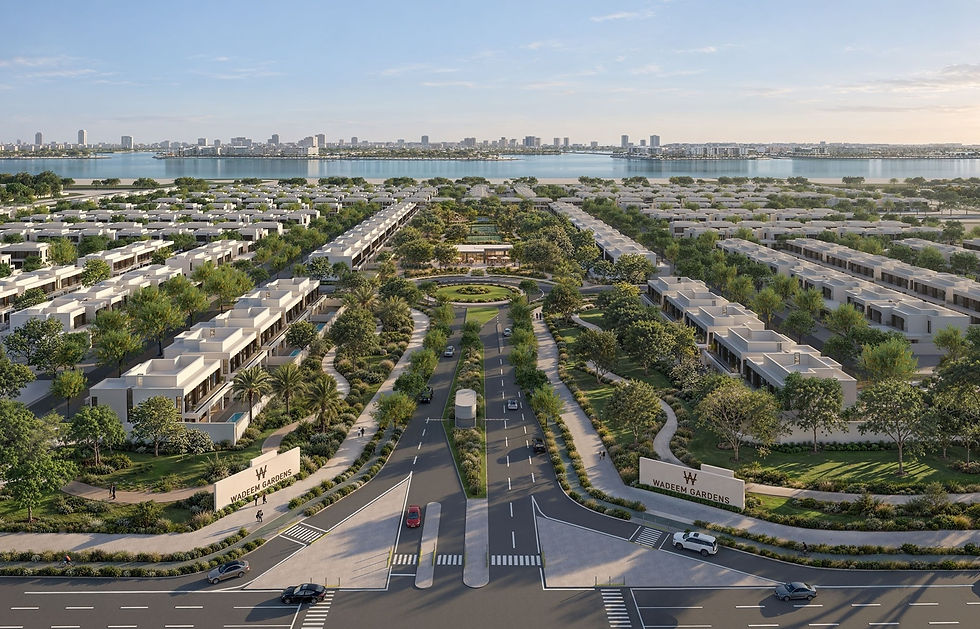
Talay comprises just 351 detached villas, available in four-, five- and six-bedroom configurations. The community includes landscaped green corridors, water channels inspired by traditional falaj irrigation systems, family amenities and access to the wider Marsa waterfront. Sales began in September 2026.
Talay is significant because it establishes the first residential pricing and buyer-demand benchmark within Marsa.
Future investors should pay particularly close attention to the resale performance and absorption of these initial homes. Early phases of successful master communities can sometimes benefit from later launches that introduce higher pricing, more amenities and greater awareness of the destination.
However, that potential is not automatic. Entry price, plot position, property type, payment structure and future supply will all matter.
Why Investors Should Be Watching Marsa Al Saadiyat
1. It Is Attached to an Already-Proven Luxury Address
One of Marsa's biggest advantages is that investors are not buying into an entirely untested location.
Saadiyat is already established as one of Abu Dhabi's principal luxury residential districts.
Official Abu Dhabi Real Estate Centre data shows Saadiyat Island recorded AED 13.3 billion in residential sales during H1 2026, making it one of the emirate's largest residential markets by transaction value.
That means Marsa begins with something many new master developments spend years trying to create: an internationally recognisable address.
2. The Cultural District Is Becoming a Complete Destination
Saadiyat's investment case is increasingly intertwined with the growth of Saadiyat Cultural District.
Louvre Abu Dhabi has already established the island globally, while Zayed National Museum and the Natural History Museum Abu Dhabi opened in late 2025. The district now contains a growing collection of museums and cultural institutions alongside luxury residential, retail and hospitality projects.
Luxury residential launches such as Baccarat Residences Saadiyat, Mandarin Oriental Residences, The Arthouse and The Row Saadiyat demonstrate the direction in which the surrounding real estate market is moving: increasingly design-led, internationally branded and targeted toward global high-net-worth buyers.
Marsa will connect directly into this ecosystem.
For residents, that creates something relatively unusual in the region: waterfront resort-style living immediately connected to one of the Middle East's most significant cultural districts.
3. Infrastructure Could Change Saadiyat's Connectivity
One of the more important elements of the Marsa masterplan may actually have little to do with the properties themselves.
New roads and tunnels are planned to connect Marsa directly with Reem Island and Umm Yifeenah Island, potentially reducing travel times between Saadiyat and the wider Abu Dhabi mainland.
The masterplan will also include an underground Etihad Rail station within a transit-oriented development hub.
Transport improvements often have a significant effect on how buyers perceive a location.
Saadiyat already offers strong lifestyle credentials. Improved regional connectivity could remove one of the remaining objections for buyers who want easier access between the island, Abu Dhabi's commercial centres and potentially the wider UAE.
4. Abu Dhabi Is Attracting Far More International Capital
Marsa is arriving at an interesting moment for Abu Dhabi's property market.
According to ADREC, total real estate transactions reached AED 117 billion during H1 2026, up 112% year-on-year.
Foreign direct investment reached AED 13.8 billion, increasing 309%, while non-resident investors from 116 nationalities participated in the market.
Perhaps even more relevant for projects such as Marsa, resident expatriates and non-resident foreign buyers collectively accounted for approximately 70% of Abu Dhabi residential sales value during H1 2026.
This is increasingly becoming a globally diversified buyer market rather than one driven primarily by domestic purchasers.
That benefits locations capable of competing internationally on lifestyle and prestige—and Saadiyat is arguably one of Abu Dhabi's strongest candidates.
5. Waterfront Scarcity Matters
Dubai has demonstrated repeatedly how strongly premium waterfront property can perform when lifestyle, quality and scarcity intersect.
Abu Dhabi is developing along a similar trajectory, but with fewer genuinely ultra-prime coastal districts.
Marsa Al Saadiyat's combination of marina frontage, beaches, cultural proximity and high-end residential product creates a relatively limited type of real estate.
The important distinction will be micro-location.
Not every property inside a waterfront masterplan performs equally.
Homes with permanent water views, superior plots, strong privacy, proximity to the marina or beach and limited competing inventory are likely to command a very different long-term profile from properties positioned further inland.
Investors therefore need to analyse Marsa at a project and unit level rather than simply purchasing "something in Marsa."
6. The Marina Could Create Its Own Luxury Micro-Market
The marina component should not be underestimated.
Aldar plans to develop what it describes as Abu Dhabi's largest marina, creating an entirely new leisure and yachting destination within Saadiyat.
Globally, marina communities often create distinct premium micro-markets because they combine residential property with hospitality, restaurants, retail and boating infrastructure.
If Marsa succeeds in establishing itself as a genuine destination rather than simply a residential marina, properties closest to this area could develop a different buyer profile from the more traditional beachfront sections of Saadiyat.
That could ultimately create several sub-markets within Marsa itself.
7. Branded Residences Are Likely to Play a Major Role
Aldar has already confirmed that Marsa's residential mix will include branded residences alongside apartments, villas and private mansions.
This aligns with what is already happening elsewhere on Saadiyat.
The arrival of Baccarat Residences and Mandarin Oriental Residences demonstrates that Saadiyat is increasingly competing within the international branded-residence market rather than simply the local luxury apartment segment.
That could attract buyers comparing Abu Dhabi not only with Dubai, but with waterfront locations in London, Miami, Monaco and other global wealth centres.
Abu Dhabi's Market Data Supports the Bigger Story
The wider numbers help explain why developers are committing so heavily to destinations such as Marsa.
ADREC reported AED 70.4 billion in residential sales in H1 2026, compared with AED 25.3 billion during H1 2025. Off-plan transactions represented 89% of residential sales value and 82% of transactions.
Repeat-sale prices across Abu Dhabi were also reported to have increased year-on-year by approximately 20% for apartments and 12% for villas during the period.
Importantly, Saadiyat is already one of the districts capturing this capital.
The opportunity around Marsa is therefore not based solely on a future vision; it sits inside an existing market experiencing considerable investment activity.
But Investors Should Still Watch the Supply Pipeline
There is one important counterpoint.
Abu Dhabi is expanding quickly.
ADREC currently projects approximately 71,000 additional residential units across the emirate by 2030, with deliveries expected to peak around 2028. Saadiyat Island is among six districts expected to account for 77% of incremental supply.
That makes property selection increasingly important.
Simply buying off-plan because Abu Dhabi is growing is not enough.
Investors should be considering:
Entry price vs comparable Saadiyat communities
How large is the premium for buying into Marsa?
Future competing inventory
How many comparable villas or apartments could eventually surround the property?
View protection
Is a sea or marina view structurally protected or could future construction affect it?
Property type scarcity
Will there be hundreds—or thousands—of similar units later?
Developer phasing
Could future releases establish significantly different pricing?
End-user appeal
Would someone genuinely want to live in the property after completion?
The strongest investment properties tend to satisfy both investor mathematics and end-user emotion.
Could Marsa Al Saadiyat Become Abu Dhabi's Answer to Dubai's Most Prestigious Waterfront Communities?
Comparisons with Dubai Marina, Palm Jumeirah or Dubai Harbour will inevitably appear, but Marsa's identity is likely to be different.
Its strongest advantage may actually be the combination of several characteristics rarely found together:
culture + beach + marina + low-density luxury housing + branded residences + major infrastructure.
Palm Jumeirah is globally associated with beachfront luxury.
Dubai Marina is associated with high-density waterfront living.
Saadiyat has the opportunity to become internationally recognised for something more culturally oriented: luxury waterfront living built around art, architecture, museums and nature.
Marsa could strengthen that identity considerably.
The Long-Term Investment Case
For long-term investors, the attraction of Marsa Al Saadiyat is less about finding the next speculative launch and more about participating in the final development phase of an already-established prime island.
Over the coming decade, the investment thesis will largely depend on several things happening simultaneously:
the Cultural District reaching maturity, infrastructure improving, the marina becoming a genuine destination, international buyer demand continuing to expand, and Aldar maintaining high development standards across the numerous phases of Marsa.
If those pieces come together, Marsa could become one of Abu Dhabi's most recognisable residential addresses.
But investors should resist treating every launch inside the masterplan equally.
The greatest opportunities are likely to emerge where scarcity, location, architecture and entry price intersect.
Final Thoughts
Marsa Al Saadiyat represents one of the largest additions to Abu Dhabi's luxury residential landscape in years.
An AED 100 billion masterplan, more than 58,000 future residents, Abu Dhabi's largest marina, 8 km of coastline, major transport infrastructure and immediate access to Saadiyat Cultural District collectively give the project significant long-term potential. Aldar
And unlike many emerging communities, Marsa does not need to create an identity from scratch.
It inherits Saadiyat.
For property investors, that is arguably the most interesting part of the story.
The question is no longer simply whether Saadiyat Island will develop. Much of that transformation has already happened.
The more important question is which properties will benefit most as Saadiyat moves from an emerging cultural and luxury destination into a fully developed global waterfront district.
For investors considering Marsa Al Saadiyat, Saadiyat Island or other prime Abu Dhabi opportunities, the key will be comparing each release against existing resale values, future supply and the individual property's long-term scarcity—not simply buying into the headline.
If you are looking at investing in Abu Dhabi and want to compare Marsa Al Saadiyat against Saadiyat Cultural District, Hudayriyat, Yas Island or other emerging waterfront communities, speak with The Foundry Realty for a tailored investment assessment based on your budget, timeframe and exit strategy.

Comments